Reflections on Marriage: 14 Years Later

About a week before Bill and I got married, red bugs ate me up.  I’d never had them before and had no idea what the big, itchy bumps were, so I showed them to my mom.  As soon as she saw them, she told me to paint every swollen, red and white whelp with clear nail polish.

Then, I spent the rest of the week bathing in Clorox water to get them dried up quickly.  AND there was lots and lots of cocoa butter to prevent scarring. I was getting married at the end of the week AND going on a cruise for my honeymoon, for heaven’s sake!

That was 14 years ago this week, and our kids still ask to hear that story and see the pictures of our wedding day; some of which show barely pink dots still visible around my ankles.

after-ceremony.jpg

June 12, 2004

Realizing our wedding anniversary was coming this week made me think back to that happy day, but it also made me consider every day since – approximately 5,110 of them.

What do I have to show for all this time?  What have I learned? How have I grown and changed and matured?  Have I picked up any wisdom along the way?


I took a few days to journal about it and also “interviewed” Bill to see what he wanted to share.  The first time I had a chance to ask him, he was watching Game 4 of the NBA Finals, so I waited for commercials and halftime break.

You would think I’d have learned by now not to try to have important conversations during sporting events.  I’m a little hard-headed, though.

Turns out, we had to talk another time.  🙂

ANYway, here are some of the things 14 years of marriage has taught us:

Bill said: Marriage is about give and take.  You won’t always get your way. Sometimes you go to a place you wouldn’t go to or watch something on TV you may not want to watch because you know it’s something the other person likes.  Hopefully the other person will do the same for you.

I said: Love is an action, not a feeling.  The warm, fuzzy, lying-on-a-bed-of-roses mindset changes.  You may not be “in love” with your husband every day, but every day you have to choose to love him, and you show you’ve made that choice by the things you do.

Bill said:  A person’s financial status is important.  I didn’t think about that much when we were dating, but I know how important it is now – to know how much debt a person has or what their spending habits are like.

(Can you tell the man has heard too much Dave Ramsey)?

I said: It’s ok to argue, to have differences of opinion.  It’s actually helpful. You discover more about your spouse and yourself as you work through conflict together.  Arguing doesn’t always mean there is a problem with your marriage.

Bill said: I didn’t really know who you were until we got married and lived together.  Then, I found out little things like you squeeze toothpaste from the bottom, and I don’t.  Or we want thermostat at different temperatures. We don’t wash and fold clothes the same either.  If I wasn’t careful, those little things could get to be big problems. I tried to change some of the ways I did things if it made sense to me to do that.  Sometimes, you compromise.

I said: Find out what’s important to your husband about how you keep house and care for the kids, especially if you’re a stay-at-home-mom or the one in change of the household stuff.  Don’t kill yourself doing all.the.things. (I heard this from Lysa TerKeurst and Proverbs 31 Ministries). Years ago, I asked Bill, “when you come home every day, what’s important for you?  Do you want to come home to a clean house? Dinner on the table? Calm and quiet kids? Do you need some downtime when you first get here?” He said he wanted dinner, so that’s what I focus on.  Yes, I keep the house as tidy as possible and do laundry and make sure the kids aren’t running naked through the backyard, but the man says he wants dinner ready when he gets home, so that is what he gets.

We agreed that it’s helpful to get to know and (hopefully) get along with your spouse’s family.  Bill said, “Most likely, you’ll end up being like your family, especially your mom, and I’ll end up being like my family, especially my dad, so getting to know each other’s family gives insight into who you married.”

We also talked about having children; that brings big changes in your marriage.  I asked Bill why he thought that was. He told me it’s because you have to share your wife’s attention after you have a baby.  There are other people to think about after that.

Now, I don’t mean to condense 14 years of marriage into 1,000 words or less because it isn’t that simple. There have been fairy-tale days (when we gazed lovingly into each other’s eyes over a romantic, candlelit dinner), and there have been horror movie days (when he walked in the house after work and I was blubbering and handed him a crying baby and went in the bedroom and shut the door).

You get it, right?  It’s just life – married, with kids, life.

You appreciate the wonderful seasons because you’ve been through challenging seasons, but you’re wiser for it, and your relationship is much stronger.

Recessional.jpg

I’d love to hear some wisdom you’ve gained from your marriage.  Please share how long you’ve been married and what you’ve learned so far.

 

7 Tips for Fighting Better

My husband and I had a challenging conversation the other night.  I like to call this having a “difference of opinion”. 😉

Have you ever had a difference of opinion with someone?  It happens, right?

So why not learn some ways to fight better?  No, I don’t mean learn how to always win the fight.

What I’m saying is, let’s learn some better ways to fight so that we can find an amicable solution or so that we can at least can walk away with our feelings and the other person’s feelings in tact.

A Fool is Quick Tempered.jpg

Photo Credit: Pinterest

7 Tips to Fight Better

  • Stop.  Stay calm.  This is important whether the conflict happens on social media or in person.  The Bible calls this being “slow to anger,” and is full of verses that speak to the wisdom in remaining composed.  Take a moment to stop and pray, even if it’s just a short, “Help me please, Lord.”  Take time to think through what happened and ask yourself, “Am I really upset at this?  Is this worth getting into a disagreement over?” If the answer is no, move on. If the answer is yes, it’s still a good idea to wait and try to keep your cool.
A gentle response.jpg

Photo Credit: Pinterest

  • Acknowledge your own part in the conflict.  What assumptions and expectations do you hold that are influencing how you talk about this situation?  A related question to ask yourself is, ‘Did I do anything to offend the other person’? A familiar verse that supports this tip is Matthew 7:1-5.  Christians are challenged to deal with the “log in your own eye” before you “take the speck out of your brother’s eye.”  It is hypocritical to point out all the things your spouse, sibling, friend, or in-law did wrong if you won’t acknowledge your part in the problem.
Micah verse.jpg

Photo Credit: Pinterest

  • Talk face-to-face and one-on-one.  Whenever possible, go to the person and talk in private.  Avoid venting to someone else. (Don’t fuss to your sister about your lazy husband or to your husband about your annoying coworker…you get the picture).  Also avoid taking the issue to social media. I think we all know what can happen here. This is called “airing dirty laundry”, and it almost always turns out badly.  In Matthew 18:15a, Jesus says, “If your brother sins against you, go and tell him his fault, between you and him alone”. This was a verse I saw over and over when I was researching this topic.  Matthew 18:15-17 was used often as the key verse to show biblical conflict management.


Guardmylips.jpg

Photo Credit: Pinterest

  • Find common ground.  Focus on the relationship.  If you can find something you have in common with that person, you’re much more likely to be able to cooperate, acknowledge the other person’s feelings, show that you care about that person, be honest about your feelings, and be respectful of the other person’s feelings .  Ephesians 6:12 reminds us that our enemy isn’t flesh and blood but the spiritual forces of evil.  Remember, the other person isn’t your enemy – Satan is, and he’s the one who wants the conflict to tear apart your relationship.


  • Listen. Let the other person talk, even if you’re the one who brought up the issue because you were hurt or wronged.  After you explain what’s wrong, allow the other person to have his/her say, too. Sit quietly. Don’t plan your retort.  Just listen. It’s ok to ask for clarification as the person is speaking – to repeat some of the things he/she said to be sure you understood – but leave some space for her otherwise.  There may be some underlying issues you don’t know about or unspoken expectations or assumptions that have made the problem worse.
Don't quarrel.jpg

Photo Credit: Pinterest

  • Focus on the main issue.  It is very likely that other problems will surface while you’re trying to work this out.  While those shouldn’t be ignored completely, they should be sidelined for the moment as you focus on the current situation.  What offended you in the first place? If it was the fact that your husband doesn’t help with the dishes and cleaning the kitchen after dinner, you’ll have to table the issue of him not helping get the kids in the bed and come back to that later.


  • Forgive.  Give grace. Did you know that God wants us to put our worship on hold and forgive someone we have a grudge against first.  It’s THAT important. Matthew 5:23-24 says, “So if you are offering your gift at the altar and there remember that your brother has something against you, leave your gift there before the altar and go. First be reconciled to your brother, and then come and offer your gift.”  God wants us to come before Him with clean hearts – not hearts burdened with contempt over an offense or argument.


The next time you find yourself having a difference of opinion with someone, remember these tips.  Take a moment to stop, pray, and ask for God’s guidance. Then, go to this person, and begin the conversation.

A Fool Vents.jpg

Photo Credit: Pinterest

Think back to some recent conflicts you’ve had.  Which of these tips did you use? Which ones didn’t you use? How did the use of these tips (or lack thereof) influence the way the conflict was handled?

Can you think of other helpful tips to share?

For more on the subject of biblical conflict management read When Your Feelings Are Hurt.  Also, see What To Do If You Have a Critical Spirit.

I used the following resources in my research for this post:
9 Ways to Handle Conflict Biblically

Conflict Resolution

Experiencing Intercultural Communication 4th Edition

Interpersonal Communication: Everyday Encounters 8th Edition

Sermon: Jesus’ Plan for Resolving Conflict – Matthew 5, 18

Tips and Tools for Healthy Conflict Resolution

What Happened When Our Family Followed God

What happens when you follow God?  What happens when your whole family chooses to do it?

Here in the Hooks household, we’ve learned that when you step out in faith and do something God has called you to do, like our family did when I became a stay-at-home-mom, you experience God.  When God asks you to leave something behind, and you do it, you will see how He can take care of you.

God will take care of you.jpg

Photo Credit: Pinterest

Our God Provides

Philippians 4:19 tells us, “my God will supply all your needs according to His riches in glory in Christ Jesus.”

In Matthew 6:26, the author says, “Look at the birds of the air.  They do not sow, nor reap, nor gather into barns, and yet your heavenly Father feeds them.  Are you not worth much more than they?”

Birds.jpg

Photo Credit: Pinterest

It’s nice to read these verses, but they’re simply inspirational words until you’ve experienced God’s provision.  Once you have, you know it – you know that you’re worth more than the birds and that the Father will take care of you because you’ve seen Him do it.

In January 2010, when I told Bill I was being convicted by God to stay at home with Ethan, he flat out thought I had lost my mind.  We prayed for peace for him, but it didn’t come.

He did the math, over and over, to compare our monthly bills to his monthly pay.

“It doesn’t work,” he confessed.

I was concerned but not defeated.  I was sure this was what God was calling me to, so this was what I had to do.

We kept praying.

Finally, Bill said, “the numbers don’t add up, but if you say this is what God wants you to do, then we’ll do it.”

That step became part of our family’s story – part of our family’s testimony.

Our God Has Sovereign Control

Providence.jpg

Photo Credit: Pinterest

When something is a part of God’s plan, He.is.working…He’s already been working previously and in the background, orchestrating events that need to align for things to go according to His plan.  Pieces will fall together here and there, but you might not see it until later.

God takes care of the needs of His people long before His people are even aware of the need.

Take the story of Joseph, for example, in Genesis chapters 37-50.  God used Joseph to save the lives of many during a famine in Egypt.

Joseph.jpg

Photo Credit: Pinterest

God, in His sovereignty, arranged the events in Joseph’s life – betrayal by his brothers and an unjust imprisonment, just to name a few – to place the man in a position to become second in command to Pharaoh just in time to lead Egypt through a terrible famine.

Genesis.jpg

Photo Credit: Pinterest

God was in control then, and He’s in control now – in our family.

Bill had been hearing the name “Dave Ramsey” for years.  A friend talked about reading his books and shared some of Ramsey’s financial advice.  Then, Bill found The Dave Ramsey Show podcasts and began listening.

Since Bill is the financially-minded one of the two of us, he found Ramsey’s ideas intriguing but pushed them aside.  He couldn’t fathom it being a reality for us since we would only have one full-time income. There wasn’t any way to get out of debt using Ramsey’s debt snowball method if there wasn’t any extra money after bills were paid…and the way it looked, there wouldn’t be any.

Over time, though, we started noticing how things were dropping away from our budget as we prepared to lose my full-time income.

We’d gotten “gazelle intense,” to borrow one of Ramsey’s favorite phrases:  We cut cable, went to a different cellular carrier to save on phone bills, reduced car insurance by changing companies, refinanced the house to lower the mortgage, started using a monthly budget…anything we could think of to make wiggle room.

Suddenly, there WAS extra money in the budget at the end of each month.  It wasn’t a lot, but it was there.

Bill borrowed his friend’s copy of Ramsey’s book The Total Money Makeover, and we read it together.

“We can do this,”  he finally said. He’d been listening to people’s success stories on the podcast, too, so he was extra pumped.

So, we decided to give it a shot, and we began Baby Step 2 of Ramsey’s Total Money Makeover in August 2014, owing approximately $20,000 on a car, a set of Tempurpedic mattresses, and a student loan.  Seven months later, we paid it all off – 7 months early on the car, 1 ½ years early on the mattresses, and years ahead of schedule on the student loan.

One of the most fascinating elements of this whole experience has been that we haven’t felt like we had to go without necessary things or struggle to pay our bills.

Provision.jpg

Photo Credit: Pinterest

Sure, we’ve sacrificed.  We started living on a budget to see where we were spending money.  There’s been a lot less eating out. Bill had to figure out how to watch ESPN without cable (that took him awhile, so he went without it completely for several months).  I very rarely shop for new clothes.

But, we’re fine!  God has provided the things we needed, and we’ve learned to be content without many of the “extras.”

Even when the numbers didn’t add up, we relied on God, and He has taken care of us.

He’ll take care of you, too.  You can trust Him. With your finances.  Your relationships. Your children’s education.  Your job. Your health. Your house. Your important decisions.  He’ll take care of you. He feeds the birds, AND He clothes the flowers, but He loves you even more than He loves them.

Flowers.jpg

Photo Credit: Pinterest

(If you’d like to read more about God’s provision in times of need, see Donna’s story or Meggan’s story).

What does He want you to trust Him with right now?  Is there a conviction you’ve been ignoring? A calling you’ve avoided?  What’s holding you back?

Would you share some things you have trusted to God? How has He provided?  Can you look back and see how He planned things out – pieces that fell together, events that coordinated?

Does It Say That in the Bible?

Have you ever heard someone say that the safest place in the world is the center of God’s will?  Maybe you’ve said it yourself. I am sure I’ve offered it in assurance countless times – even whispering it to myself when I was afraid of something God was speaking to my heart.

GodsWill.jpg

Photo Credit: Pinterest See!  Even Pinterest says so 😉

I recently read a blog post that has made me rethink this common statement.  Stacey Pardoe’s post, “Why the Center of God’s Will Isn’t Always Safe” was in the first link-up I ever participated in.  It was on the Raising Homemakers link up in April, and the title caught my attention. I clicked on it, read the post, and haven’t been able to get it off my mind.

Pardoe wrote, “In our culture, safety implies protection from danger.  It implies a life in which risk is minimal and there is little chance of pain, suffering, or injury”.

Further, there tends to be a misconception that once you become a Christian, your life gets easy or simple or you don’t have any more worries.

This is far from the truth.

Many of you have stories involving pain, suffering, and loss.  I’ve shared some of mine and begun to highlight those of some others, too.

So, Pardoe re-words the sentence by changing one, solitary word, and more firmly aligns the adage with Truth.  When we understand this familiar saying the way she has re-framed it, we can really understand what it is like to walk with God and be in the center of His will.

No, it isn’t safe.

Oftentimes, it feels crazy  or worse!

But when you’re doing His will, you’re always secure!  Thank goodness!

Take a few moments and click over to Pardoe’s post, “Why the Center of God’s Will Isn’t Always Safe.”

Secure.jpg

Photo Credit: Pinterest

What do you think?  Does this rewording seem more accurate based on your knowledge of the Bible and of the lives of Christ-followers?

Would you share examples of times when being in His will wasn’t safe, but you were certainly secure?

Christian Mom – What are You Teaching Your Kids?

What do you want your children to remember about you after you’re gone?  What do you want them to learn to value from you? What’s the most important thing you could teach them?

HooksFam.jpg

The Hooks Family June 2017 – Image by Real Promises Photography

My children will likely learn that family is to be treasured.  We are very careful to spend time with both sides of our families: their grandparents, aunts, uncles, and first cousins as well as extended family – great grandmothers, great aunts and great uncles and other cousins.

Ethan and Emery already know a little bit about household finance as Bill has focused on that since we used Dave Ramsey’s debt snowball method to get out of debt.  Bill frequently plays Ramsey’s radio show podcasts in the car and at home.  Ethan even requests to hear them sometimes.  (I think it’s because Ramsey often says things like “dumb”, “idiot” and “stupid” – words we have asked our kids not to use.  I hear stifled snickering coming from the back seat when Dave explains to someone, quite emphatically, how stupid it was to go into debt to buy a new car).  The main thing is, though, that both kids are learning at a young age that it is essential to manage your money and that going into debt is a big no-no.

The kids also are learning that it is necessary to take care of our bodies – to remain physically active and to consider what we eat. Bill and I typically get up an hour early 3 days a week to do cardio workouts at home.  Sometimes the kids get up early too, and heckle us about how we’re doing the moves wrong or asking how come mommy is stopping (breathing heavily with my hands on my knees) when the people on the video are still going. We often have conversations about why they should eat less mac-n-cheese and french fries and more green beans and grilled chicken.

But, I have to ask myself, “Are these the most vital things my kids should learn from me?” Family, finances, and fitness are valid lessons. In fact, they are part of what it means to Christians to be stewards of our bodies and the resources God has given us.  They are significant pieces of the Christian walk. But, should they be our main focus?

Hooks kids.jpg

Family photo of me and the kiddos summer 2017

The answer is – NO.

If I follow Christ, and I do, the most important thing my children should learn from me is to trust God.

End of story.

I was reading a lesson in the Experiencing God bible study by Henry and Richard Blackaby and Claude King, and was reminded of this.  The authors write, “Our greatest contribution to God’s kingdom is teaching our children to watch to see where God is at work around them and then join Him.”

The thing is, God already has a purpose for them.  He did before Bill and I ever even decided we wanted to be parents.  {Hint – He has a purpose for everyone. Don’t believe me? Read Psalm 139: 13-16 and pay close attention to verse 16}

4dc962cc4bc6ad4b3a44d2f30820246c.jpg

Photo Credit: Pinterest

Yes – God already has a plan for each and every one of us including my kiddos.

The lesson in Experiencing God reminded me that, first, God’s purpose is that people become more like Christ.  I was reminded to pray with and for my children.

Ethan has already asked Jesus to be the Lord of his life, so one of my prayers for him is that God will show us how to disciple Ethan so that Ethan will learn to follow God’s call on his life.

As far as we know, Emery has not asked Jesus into her heart, so my prayer for her is that she will and that she will come to trust Him and follow His calling on her life as well.

I was also reminded to talk to my children about how God has already worked and continues to work in my life and in our family’s life.  (This should be just as much a part of our family’s story as are Dave Ramsey radio show podcasts and cardio workouts).

Incorporating this could be a little tricky for parents though.

Our first instinct as parents is to point our children back to ourselves: when they ask for advice on making a decision, when they face a difficult situation with peers, and so on.  I don’t think this is 100% wrong 100% of the time, but we have to be careful. Are we facing these issues in a Christ-like way or as the world would face them?

484e83a6d22f0eb9c44d06ddfb029fde.jpg

Photo Credit: Pinterest

For example, Ethan is already talking about what he wants to do after school, what his job might be.  When he talks to me about it, I try to encourage him to ask God. I have assured him that God has a plan for him and will tell him what to do if he will only ask.  Plus, I don’t want to inadvertently point him toward or away from something just because it is what I would prefer for him to do.

Henry Blackaby says to ask “God-centered questions.”  He explains: “Instead of ‘What would you like to be when you grow up?’  I would ask, ‘What do you sense God wants you to do?’…I wanted my kids to learn to put their trust in God, not in their parents.” (emphasis mine)

9ccb198cb41d9d29bf4ecd98ba0ca821.jpg

Photo Credit: Pinterest

This is ultimately what my husband and I want as well.  I pray that this is what you want for you family, too.

So, let’s follow the recommendations in Experiencing God: Pray with and for our children.  Talk to them about how God has and is working in our lives.  Worship and serve with them.

This is the greatest thing we can do for God’s kingdom.

How about you?  How did your parents point you to God and encourage you to seek Him and His purpose for you life?  How do you foster this in your own children?

If you do not have children of your own (or yours are adults), how can you encourage a pursuit of Christ in the lives of younger or less mature Christians around you?

f312d48c6a8ac640d1be74a20280a994.jpg

Photo Credit: Pinterest

“Let us consider how we may spur one another on toward love and good deeds.  Let us not give up meeting together, as some are in the habit of doing, but let us encourage one another – and all the more as you see the Day approaching.”Hebrews 10: 24-25, NIV


What To Do If You Have a Critical Spirit

You’re in for a treat today – our first guest post on Servant Girl Stories. I am honored to introduce my friend, Leigh, founder of Be Still Mama ministries at First Baptist Church of Indian Trail. Leigh and I met about 3 years ago when she and her husband, Brian, joined our life group at church. Since then, I have grown closer to her as a friend as our journeys as moms have merged. I also participate in Be Still Mama and enjoy working with her to encourage and love on the moms who also become involved in the ministry. She has such a heart for moms of young children and desires to pour into those moms and help lead them to the foot of the cross. Please welcome, Leigh Anderson!

By: Leigh Anderson

Growing up in the cul-de-sacs of a few big city suburbs, riding bikes and managing sticker collections, I didn’t have much to be critical about other than broken sidewalk chalk or a missing New Kids on the Block cassette tape. Or the fact that we got to pick out one “sugar cereal” per month and my brother would eat the entire box in one sitting as soon as we got home. Those were my critical moments, until my life changed one day in the formal sitting room in the front our house.

It was late afternoon, our friends were playing outside, and it was the first time I’d ever felt my chest tighten and my stomach go into a knot as the word “divorce” came out of my parents’ mouths to my brother and me. (Divorce is just as much a part of my parent’s story as it is of mine, so I share this milestone with the utmost respect for them but as a pivotal point of brokenness in my life).

f58789b03b5d90e5ca19460f22c5b246.jpg

Photo Credit: Pinterest

The onslaught of changes was not gradual; it was abrupt, and life as we knew it was completely different for all 4 of us mere hours after that conversation happened. I experienced brokenness beyond what I’d ever experienced. And being so young, it was difficult to name it or understand it or tell anyone how I was feeling because I simply didn’t know.

We moved out of state shortly after that, and our new reality was unlike any I’d ever experienced. It presented more challenges than successes. That wasn’t only true for our family but also true within the new community where we’d moved.

Naturally, if people have something in common, that will be the subject of conversations. Our common thread was struggle, and it was mostly what anyone talked about. There weren’t people in our community coaching people to have positive attitudes, to talk highly of each other, to stop gossiping, to lift each other up, or to spur one another on. It was just natural to share the crappy thing that happened that day and who did it. Those were just the everyday subjects of conversations.

Slowly but surely as we lived our lives and grew up, that mentality of complaining or criticizing, something I viewed as normal and right, stuck with me. And I didn’t even realize it was something bad.

I didn’t realize all of this until a friend recently had the courage to shed light on this aspect of my personality and challenged me to really work on it. After talking with her and thinking about it for a while, a light went off in my head. I’ve known for a long time that I struggle with a critical spirit during particularly stressful seasons of my life, but now I know why. And now that I know why – because it’s been a part of my life for 30+ years – it’s time to make some changes.

In Be Still Mama, the ministry I lead, I’m passionate that we all find the root to the challenges we face. If we don’t dig straight for the root, treating the symptoms is a waste of time. When we focus on the bad in others, our circumstances, or ourselves we focus our eyes on brokenness, not wholeness. God’s will for us is wholeness, and we can only have that in relationship with Him. When we focus so much on brokenness, it’s what we ultimately become – broken in our relationship with Him – because we took our eyes off of Him and started staring at everything that’s wrong.

1ce526d3e870fec7e36c346e9576fdb5.jpg

Photo Credit: Pinterest

We form and feed critical spirits within ourselves when we continue to focus on the flaws of our spouses, our children, our friends, or the people we resent. The resentment comes after they fail to meet the expectations we’ve set for them – my husband hasn’t lifted a finger around the house, my friend didn’t respond to my text for 12 hours, my kids won’t listen or obey and they fight all the time. It’s easier to tear down these people in an effort to feel better about ourselves than it is to compliment them on something they’ve done well or a character trait we really admire. When in reality the latter is the key.

My pre-programmed reaction for brokenness is to criticize and wrestle with how that circumstance or that person made ME feel. I made every encounter with brokenness about me, and that’s the total OPPOSITE of what we’re called to do with it. Big no no.

When we encounter brokenness, specifically in people, we have several choices. We can talk about them to others, we can criticize/judge them within our own hearts, or we can make the choice to see them exactly how Jesus sees them.

The reason God doesn’t want us judging each other so harshly is because we simply don’t know what we’re talking about. We see a sin; God sees the heart. We see an annoying behavior; God sees a stronghold. We see poor choices; God sees pain that they won’t let Him heal. Many of these instances naturally become a lot less personal because I’m making them more about God and less about me.

Learning this lately has been so refreshing. It also shined light on how damaging it was to my own heart to operate in a critical and negative way. And as a mom, if my heart’s damaged and I operate out of that place, there’s a high probability that I’m causing damage to my family.

Encourage someone today. Double points if it’s someone who’s recently really let you down. We encourage and uplift people as an act of obedience to God’s commandment for us to love our neighbor as ourselves. You need encouragement; you need forgiveness; you need to know you matter, so give that to someone else today. May we not love in an effort to see what we can get from other people; may we love other people because we love God – as simple as that.

f6d1a2f383371019ea516e8eb02a92e0.jpg

Photo Credit: Pinterest

Meet the Author: Leigh Anderson is a follower of Jesus, wife to Brian, and mom to two toddlers. She graduated from Newberry College with a degree in Communications and Sociology and went on to complete a Master of Fine Arts in Film/Television/Media Theory from Savannah College of Art and Design.

Although her plan was to sell everything and move to New York City to take a producer position at CBS News New York, God had other plans. Instead, she spent the last 14 years in professional ministry roles in communications and marketing. Most recently, she was the Director of Marketing and Community Engagement for the Christian radio station New Life 91.9.

After being laid off from New Life in 2014, she became a stay at home mom and through the inspiration and leadership of another Charlotte ministry leader, launched the ministry of Be Still Mama at First Baptist Church of Indian Trail.

You can find Leigh on Facebook at Leigh Baldwin Anderson and at the public group Be Still Mama.

A #parentingfail – Part 4

This is the last in a series of 4 posts where I explore one of my parenting fails – my inability to control my temper when my kids push my buttons.  If you’re just joining us, please go back and read Part 1, Part 2, and Part 3. The following list is a continuation of the tips I shared in Part 3 – helpful parenting tips I’ve learned so far.

80df71758a63ebeccb0fcc18796c9ece.jpg

Photo Credit: Pinterest

  • Have structure – So much research supports the fact that children need structure (and even want it) by way of boundaries, rules, routines, and schedules.  You don’t have to be rigid, but it is good to set rules and expect that children behave accordingly.
90e31a8624063cb0f1f73e8b646d7780.jpg

Photo Credit: Pinterest

  • Delegate/Accept Help – Children love to help, especially when they are little.  They may make more of a mess than you’d like or not do something exactly the way you want, but bite your tongue, be patient, and accept the assistance when they want to give it.  Also, accept help from others – your mother-in-law, best friend, neighbor, husband – especially when you have tiny babies. Give others the blessing of being able to assist you.
12986955_10154109742214886_9102884160519149438_n.jpg

Emery helping me wash the dishes – she was about 3. 

  • Plan Ahead – Things go so much better when I have done as much as I can to prep ahead of time.  Have the kids make school lunches and pack book bags the night before. Lay out clothes the night before.  Plan an entire week of dinners the weekend before. Many of the screaming fits I have thrown have been in the morning before school when someone couldn’t find his homework or her shoes because those things weren’t put where they should have been ahead of time.
  • Respect Your Children’s Father – I realize this is controversial, but it simply has to do with how God wired us as male and female.  Our children need to see that their mom respects their dad. I imagine this can be difficult if there is a separation or divorce.  However, some of the most amicable separations/divorces I have seen have been between people who are still nice and respectful toward each other.
bbea434625d0240eb231cec474987751.jpg

Photo Credit: Pinterest

  • If It Isn’t Working, Change It – Some of this advice may not apply or may not work based on your family culture.  These aren’t written in blood. The best you can do is try them and then tweak them to fit best with the dynamics of your family.
  • Get to Know Your Kids – (a little long.  Bear with me…I promise I will make a relevant point).  In Henry Blackaby’s Experiencing God study, the author says, “In every situation God demands that you depend on Him rather than a method. The key is not a method but a relationship with God.“ He goes on to say, “ A formula is not the way to recognize God‘s voice either… If there was a formula… You would not have to seek God with all your heart. You could mindlessly use the formula and neglect your relationship with God.“ I think this applies to our children, (or anyone else in our lives for that matter). If there was a formula for interacting well with our kids, we would not have to seek genuine relationships with them; we wouldn’t have to spend time getting to know them. We could just rely on the formula – those five tips from that parenting article or that list of advice from that veteran mom. This isn’t to say that these things aren’t valuable or some methods aren’t worth your time; however, we shouldn’t completely rely on them. Get to know who your children are by spending time with them. For example, I learned early on that Ethan was an outdoor kid. He likes watching TV, but he LOVES being outside – digging in the dirt and rocks, exploring the woods, hunting for lizards and frogs, running in the yard having a Nerf gun war… That led me to notice that he and I also interact better when we are outside. Coop us up in the house all day, and tempers are likely to flare. Put us in the backyard, and we can jump on the trampoline, pull weeds and smell gardenia blossoms all day! I know this because I have spent time with him – watching him, talking to him, noticing what he likes to do, and so on. Now if we could just spend all our time outside, we’d be best buds!  But, this is honestly one of the hardest things for me. It takes energy that I would rather not expend. It takes listening to and talking about and doing some things that don’t interest me (hello, Nerf gun wars?!). It takes time away from the things I want to do. It takes creativity and imagination. But I have to do it, and you have to do it, as often as we possibly can. This is building the relationship, and this is what our children need most (and it will do us a world of good as well).
9a9a3ed4c5aa3d959f4418d38c173764.jpg

Photo Credit: Pinterest

My son isn’t a bad kid.  More than likely, neither is your kid.  Our kids are just being kids at their stage of development doing what kids do at that stage.  As parents, we have to learn how to work through that as best we can and get out on the other side with our sanity and our relationships with our children in tact.

Above all else, we have to fight every day to choose joy in parenthood, or Satan will steal it.  He’ll lull us into a cycle where we focus on all the things our children are doing wrong and miss all the wonderful things about them.  That’s how he steals the joy in families, especially from mothers.

9a9a3ed4c5aa3d959f4418d38c173764.jpg

Photo Credit: Pinterest

Oh man!  That opens up so much more to talk about when it comes to our children, and more I should tell you about my struggle with my mommy-temper, but I should probably move on for now.  I imagine there’ll be more opportunity for me to revisit this subject soon enough.

What situations are most difficult for you when it comes to your children’s behavior?  What makes you “lose it”? What tips and advice have you found to work when you’re in tough interactions with your children?

~~~~~~~~~~~~~~~~~~~~~~~~~~~~~~~~~~~~~~~~~~~~~~~~~~~~~~~~~~~~


Next week is a first on the Servant Girl Stories blog – we’ll have a guest post!  You’ll meet Leigh Anderson, founder of Be Still Mama, a women’s ministry at First Baptist Church of Indian Trail.  Join me next week for her post about what happens when we have a critical spirit.

A #parentingfail – Part 3

Ethan was sitting in the backseat of the car listing his favorite songs that play on K-Love, the Christian radio station we play.  Then, Hillsong United’s “So Will I” came on, and he quickly added, “ Oh, I like this one, too.” Bill and I looked at each other and grinned, thankful that he is listening to, learning to sing, and appreciating music that glorifies God.

So Will I.jpg

Photo Credit: Pinterest

It reminded me that he’s a good kid – he’s not perfect, no one is – but he’s got a good heart (and he loves the Lord, thank goodness).

Why is it so difficult, then, to be his mommy?  Why do I lose my temper with him so often?

In “A #parentingfail – Part 1”, I explained how I struggle with my temper when dealing with difficult situations with my children.  Then, in “A #parentingfail – Part 2”, I shared how God revealed that He wasn’t going to take away my temper problem.

Today, I want to explore what I have learned so far on my 9-year parenthood journey.  The lessons have come from trial-and-error, tears, arguments, seeking advice from other moms, reading parenting articles, and just good ol’ experience.

Murdock 2017-148.jpg

Ethan, Emery, and I pose together on our vacation last summer (2017).

I’m not professing to be an expert…the last few posts have shown quite the contrary.  Despite this fact, I know I have learned some valuable lessons along the way, and I want to pass along some of these tidbits.

Granted, it is still difficult to act on what I know when I’m in the throws of dealing with disobedience or tantrums.  That being said, here’s what parenthood has taught me so far:

  • Stay Calm – I know, I know…start off with a difficult one, but if you can stay calm, you could keep the situation from escalating.
    2bd68148dffadc5053d0b92aa149b6d9.jpg

    Photo Credit: Pinterest

  • Walk Away – It’s ok to admit you need a minute when you feel yourself losing it.
  • Get on Their Level – Rather than towering over them and literally talking down to them, sit or kneel so you can look them in the eye.
  • Give Choices – When possible, allow them to choose or at least couch their responsibilities as a choice.  Ask, “Do you want to brush your teeth or make your bed first?” Sometimes I ask this during the “Get Ready for School” routine in the morning.  Ultimately, they’ll have to do both but making it seem like they have choices sometimes helps things go more smoothly.
  • Don’t Hover – My kids do better, whether on their own or playing with others, when I am not standing over them waiting to correct every mistake they make.
  • Relax Your Need for Control – Looking back, I can see that many of the blowups I’ve had with my kids were because I insisted on having something done the way I wanted it, when I wanted it. Now, I try to ask myself if I must have it done my way or if I can give them the chance to do it their way.
  • Shut-up – I’m pretty sure that God has said this to me a few times – almost audibly. I don’t have to have the last word. I may not even have to have a word at all. Sometimes I should just shut up.
  • Be specific, simple & direct with instructions – This is especially helpful when the kids are younger. Don’t give a long list of complicated steps and details. Give one step at a time, wait for that to be done, and then give the next step.
  • Be positive – Look for the things they are doing well, and give compliments.  Also, try to have a more positive mindset about your children overall.  Once you view them negatively (because of their behavior, for example) it is difficult to redirect yourself to have a positive outlook.  If you find yourself thinking more negative then positive thoughts, think of 3 good things about your child. Write them down if you want.  List more than 3 – as many as you can, in fact. This simple exercise will help refocus your mind on the wonderful things about your children. (And keeps Satan from stealing your joy…I’ll talk about that next week).
82d9003e332cc5e20fc83c910ca3ef73.jpg

Photo Credit: Pinterest

  • Be present/Put down your phone – You could also say turn off the television, get away from the computer, or put down the tablet. We need to look at our children, talk to them, listen to them, play what they want to play, allow them to help when they want, and focus on them when they need our attention.
  • Be consistent – (Insert eye roll here, especially if you read Part 1 and feel my pain).  You may have to keep it up for five years before you see the fruits of your labor, but it is important to stick to your guns.  Ethan is 9, and over the past 4 years or so, we have started to notice him doing things, unprompted, that we had been trying to teach him for years!  HALLELUJAH!

For the sake of keeping my posts as brief as possible, I’ll stop there and finish sharing the list next week.  I’ve saved the most important one for last, so you’ll have to come back 😉 Also, I’m going to reveal my first guest blogger who’ll write for you the last week in April.  You don’t want to miss the announcement!!!

P.S. Here’s “So Will I” – one of Ethan’s favorite songs 🙂


A #parentingfail – Part 2

I could have sworn this post published last week…I even checked?!  I must be crazy.  Anyway, if this is a repeat, I apologize.

Author’s Note

Sharing things that I’ve failed at doesn’t exactly bring me joy.  However, when I began to realize that I was going to have to be obedient to God’s conviction and write a blog, God showed me that I would have to be honest, real, vulnerable. That I would have to be truthful and tell you things about being a wife, a mom, a believer, a woman that maybe weren’t so glamorous or flattering or honorable or joyful.  This was one reason I held off for so long. There are a lot of things I don’t want to tell you about myself. But, in the end, I realized that I am just God’s servant girl, and right now, He wants me to tell you some of the stories He’s given me so you can connect, so you can relate, so you can see God in my stories and in the stories that He’s given you.  Last week, in A #parentingfail – Part 1, I had to disclose what I see as one of my biggest failings as a mother. This week, I reveal the answer I got from God after years of pleading to Him to make me a better mom.

~~~~~~~~~~~~~~~~~~~~~~~~~~~~~~~~~~~~~~~~~~~~~~~~~~~~~~~~~~~~~~~~~~~~~~~~~~~~~

After I scream at one of my kids or slam the door in frustration over something they’ve done, I feel the most horrid feeling.  It’s like my heart and soul are fighting to stay alive. I feel tight and hot and putrid in the center of my chest. Satan tells me I am not fit to be a mom.  He whispers that, if I continue yelling at my children, my son in particular, they will hate me when they grow up and will have nothing to do with me. Then, the tears come, hot down my cheeks, and I just want to curl into a dark corner and stay there.  It’s a disturbing feeling – the notion that your children might walk away from you one day and never look back.

I don’t want that.

Early on, I read all the articles I could find and talked to as many people as I dared to admit to that I frequently lost my temper with my children.

And, I cried.  Storehouses of tears.

And, I prayed.  Mountains of prayers.  For God to take away my temper and make me stop yelling at my children.  For them to still love me even after all my temper tantrums.

But then, I’d be right back in that place, that hot, angry place where I’d end up screaming again.  And, I’d think, “why aren’t my prayers working?! Why am I still yelling so much?”

Pray hardest.jpg

Photo Credit: Pinterest

Truthfully, the years have worn off the sharpest edges.  I’ve learned better ways to interact or deal with disagreements or how to walk away.  So, there has been some improvement, but it has been minuscule compared to what I wanted – a total transformation, a 180 degree turn…June Cleaver, maybe?  😉

I didn’t think God was answering my prayers if He didn’t make me stop yelling altogether…after all, that was what I asked for, cried for, in my prayers.

Then, a few years ago, I was in a Be Still Mama Bible study, and we read Stuck by Jennie Allen.  In the study, Allen discusses 2 Corinthians 12:7-10 where Paul discloses the thorn in his flesh and how he has pleaded with God to take it away from him.

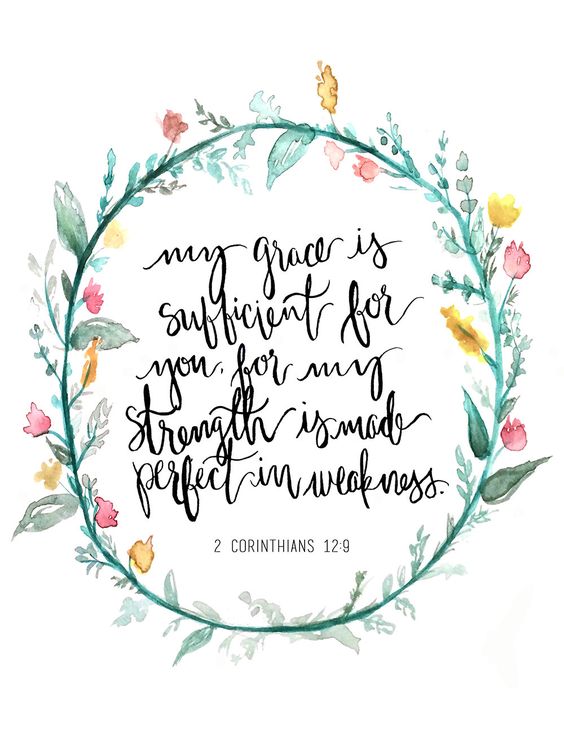
So, to keep me from becoming conceited because of the surpassing greatness of the revelations, a thorn was given me in the flesh, a messenger of Satan to harass me, to keep me from becoming conceited.  Three times I pleaded with the Lord about this, that it should leave me. But he said to me, “my grace is sufficient for you, for my power is made perfect in weakness.” Therefore I will boast all the more gladly of my weaknesses, so that the power of Christ may rest upon me.  For the sake of Christ, then, I am content with weaknesses, insults, hardships, persecutions, and calamities. For when I am weak, then I am strong. ~ ESV

In essence, God told Paul no.  God would not take away the thing that was tormenting Paul.

Grace is sufficient.jpg

Photo Credit: Pinterest

Why not?  Why would God say no to a fervent prayer from one of His children?  Why wouldn’t He give relief when it was requested?

The answer was the same for Paul then as it is for me now: Without the thorn, Paul wouldn’t look to God as he should.  Without my thorn, I wouldn’t lean on God as I should.

Our weaknesses, just like our strengths, are God-given – and they are both ultimately for God’s glory.  We use our strengths to glorify Him, and we bring Him glory in our weaknesses as well.

How is that?  That doesn’t make sense!

When we are weak – when we lose our tempers and yell at our children, for example – we must acknowledge our need for God.

When we read every possible child psychology and parenting article, scouring for something that will work, and we still yell, we come face-to-face with our need for God.

And we throw ourselves down at His feet.  We beg forgiveness. We confess that we can’t do it alone.  We ask Him to help us.

In our weakness, He is strong.

I remember the moment I came to that conclusion after completing the section in the Stuck study where Allen talked about Paul.

I KNEW in that moment that God said no to me, that the temper and outbursts were a thorn in my flesh that wasn’t going anywhere.

And, you know what?  I was immediately at peace with it.  Immediately!  That was my confirmation that God was indeed saying no but that everything would be alright.  God always gives peace.

God v Satan.jpg

Photo Credit: Pinterest

Now, this isn’t to say that God will always say no to our requests. Surely He’s said yes to some of yours as He has said yes to some of mine.

And, it isn’t to say that He’ll say no to you specifically about your temper and your interactions with your children.  You may get a different answer.

What’s more, it isn’t to say that God won’t give me relief in some ways.  He has. He has let me see better ways of interacting with my children that don’t always lead to meltdowns.  There will probably be other breakthroughs and lessons to learn in the future as well.  We are called to pray no matter what.

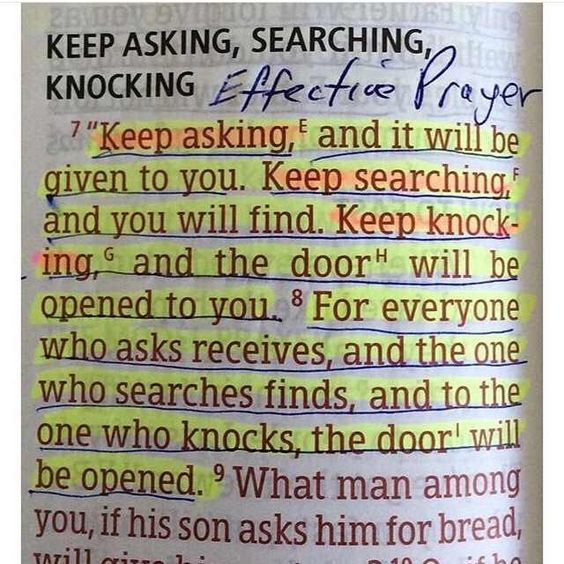
Effective Prayer.jpg

Photo Credit: Pinterest

What I am saying is, It’s ok to ask.  It’s ok to plead and cry. However, if you pray and the answer is no, do not be discouraged.  Accept God’s peace when He says no. Find solace in the fact that He is leaving the weakness so that you’ll lean into Him and grow closer to Him.  He will get glory in some way, and that is in fact our ultimate purpose, to glorify God with our lives, even through parts we don’t like.

When has God told you no?  What were you asking for? How did it feel when you realized that the answer to your prayer was no?  I realize that these may be painful situations, but, if you are willing, please share as your stories can help others in similar situations.

*I’ll conclude A #parentingfail next week with Part 3.

~~~~~~~~~~~~~~~~~~~~~~~~~~~~~~~~~~~~~~~~~~~~~~~~~~~~~~~~~~~~~~~~~~~~~~~~~~~~~

Afterword

I wanted to share some of the notes I took in the Stuck study after I realized God was telling me that He wasn’t going to take the thorn in my flesh.  It was a kind of prayer that I journaled. Maybe it will help you, too. 

It was written in response to the following instructions: Read about the apostle Paul’s stuck places.  As you read, think about these two questions – “Who are you, Lord?” and “What do you want from me?” and journal your thoughts…

My response – Who are you, Lord?  – a God full of grace – a God with enough grace for me and all the horrible things I have said, done, and thought.  A God whose power is most evident when I am weak. When I know and accept that I am weak, I cannot brag and take credit for the blessings and good things in my life.  I have to accept that these things have come from God.

What do you want from me?  God wants me to allow myself to be weak.  God wants me to lay the weaknesses on Him.  God wants me to give Him the glory when He sustains me despite my weaknesses.  The weaknesses allow me to see that I do need God. The weaknesses take the pressure off me – I don’t have to be perfect, strong…I can’t be those things.  The weaknesses allow me to make room for God – to let Him take over.

The Point of my Life.jpg

Photo Credit: Pinterest