My Dog’s Trash Can Looting Helped Me Understand How God Responds to Sin

When Zoe, our miniature schnauzer, is bored, she goes into a bathroom and roots through the trash can.  Her favorite item to shred is the toilet paper someone used to blow their nose. She’ll also pull out napkins, chewed gum…basically whatever she thinks she can tear up.  We’ve learned to keep our bathroom doors closed since the bathroom trash cans are the ones she raids.

Zoe_n.jpg

Zoe on her first birthday – June 2018

Just the other day, I saw a piece of shredded napkin on the floor and started to get upset but stopped to ask myself – why?  Why would she nose through smelly, nasty trash when she could chew on any of the dog toys lying around on the floor?

Zoen.jpg

Does that look like the face of a dog that would do anything wrong?  Does it?

Why choose something trashy over something you were meant to have?

Then I realized God might ask himself this same question when His children choose sin over Him.

“My child,” He wonders, “why dig through the trash when I’ve set blessings in front of you?  Why work so hard to find something sinful to fill your time when you could sit quietly at my feet and be satisfied?”

I’ve noticed that Zoe is more likely to turn to trash can looting when no one is paying her any attention.  It’s like she can’t figure out what to do with herself, so she turns to the easiest thing: digging in garbage.

Zoe.jpg

Her favorite place to be – my lap 🙂

Isn’t that when sin creeps in on us, too?  When we think no one is looking? When we’re idle?  Bored? It’s much quicker and easier to turn to something sinful than to turn to something good…and I don’t even mean something extreme like turning on the computer to look at pornography…although that could be the case.

I’m talking about those things we default to when there’s a moment of idleness – scrolling Facebook or Instagram and comparing your body, house, spouse, car, job, clothes, children to what you see on your feed; jumping on Amazon and ordering the Deal of the Day just because it’s 30% off and you have Prime so shipping is free even though you know that purchase will put you over the budget you and your spouse agreed on at the beginning of the month; turning on the TV to watch that show you find so entertaining but is filling your heart and mind with thoughts that don’t glorify God.

Look, I’m talking to myself here.  I’ve turned to all these things and plenty others when I didn’t want to take the time to think of something wholesome to do.  When I just wanted to chill out. When I needed an activity that required no real thought or effort…just for a moment.

I promise.  I’ve been there, and I’m not preaching to you or fussing at you.

But, that little moment is when sin creeps in.  The jealousy. The lust. The anger. The gluttony.  The laziness.

And sin is what keeps us from God.

Isaiah592.jpg

Photo Credit: Pinterest

I don’t want sin to keep me away from God.  I want to be able to go to Him clean. So, I have to repent.  That means that I am more than just sorry that I got caught; I am remorseful to the point of turning – away from that sin, away from that lifestyle, away from that way of thinking, away from whatever stands between God and me.  I turn from that, and I look to God.

Repentance was one of the first messages Jesus taught when he began his public ministry.  Both Matthew’s and Mark’s gospels record Jesus as speaking about repentance right away. So it must be important.

That means I have to do it.

That means you have to do it.

Ask God to show your sin to you.  Ask Him to convict you. Then turn from that sin and go the other way…toward Him.


Everything I Needed to Know I Learned from my Grandma

“The best thing you can do to someone who is being mean to you is to be as nice as you can to them.” I distinctly remember sitting on a stool at the counter in my grandma’s kitchen one afternoon after school when she said this to me.

Seventh grade was my first real encounter with girls being mean just for spite – saying snide things about my clothes or my hair or something like that. Undoubtedly, she and I were talking about this, and her advice was to be as kind as I could in return.

That sounds crazy, right?! It definitely isn’t worldly advice. Worldly wisdom says to be mean back to those girls. The world’s advice is to get even when someone does you wrong. But, grandma was saying to be nice!

She said, “being nice in return is your best choice because it is the opposite of what the person expects. That person expects you to cry, but you don’t cry, at least you don’t cry in front of her. If you’re nice, she doesn’t get the reaction she was looking for. There’s no drama. And a lot of the time, that person will eventually move on. It’s a really good way to handle a bully. And,” she added, “it’s what the Bible says to do, too.”

At some point in the conversation, I’m pretty sure I remember the phrase “heaping burning coals on their head.”  Grandma said that was the part from the Bible… So, if the Bible and Grandma said it, it was good enough for 13-year-old me.

In my lifetime, I have come to find that Grandma was right. The best thing to do is to be kind to people even when they aren’t kind to you. She was also right when she said that most of the time, your response would make them leave you alone…eventually.

But where did Grandma get this? She told me it was biblical?

As an adult who is concerned with living a godly life, I’ve looked into this further and found that it is indeed advice from the Bible. King Solomon, in all his God-given wisdom, wrote about it in Proverbs, and Paul echoed it in his letter to the Romans.

Proverbs 25:21-22 says, “if your enemy is hungry, give him bread to eat, and if he is thirsty, give him water to drink, for you will heap burning coals on his head and the Lord will reward you. “

Um…what?

The English Standard Version Study Bible (ESV) explains these verses the best:

The image of the burning coals on your enemy’s head is “likely an image for leading him to repentance or shame, suggesting that he will feel inward burning pangs of guilt for his wrongdoing. In any case, the message is clearly to repay evil with good… The image of ‘burning coals’ does not imply something that harms the enemy because it further explains the bread and drink in Proverbs 25:21, which do him good, and also because Proverbs forbids taking personal vengeance… Finally, ‘the Lord will reward you’ implies a good result from ‘burning coals’ which is most consistent with leading a person to repentance.”

To understand how this works, jump ahead to Romans 12.  Verses 9-21 discuss Christian behavior and echo things many of us are used to hearing:

“Bless those who persecute you; bless and do not curse them” (verse 14)

“Live in harmony with one another” (verse 16)

“Repay no one evil for evil but give thought to do what is honorable in the sight of all” (verse 17)

“If possible, so far as it depends on you, live peacefully with all” (verse 18)

Romans12_18.jpg

Photo Credit: Pinterest

“Beloved, never avenge yourselves, but leave it to the wrath of God” (verse 19)

Then, we get to verses 20 and 21:

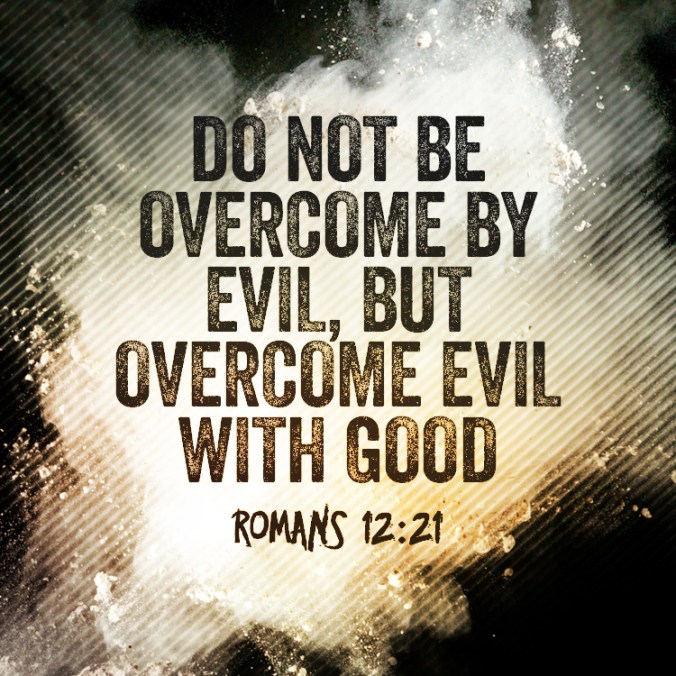
“… if your enemy is hungry, feed him, if he’s thirsty, give him something to drink; for by doing so you will heap burning coals on his head. Do not overcome evil by evil, but overcome evil with good.”

Romans-12-21.jpg

Photo Credit: sermonquotes.com

“There are those burning coals again,” you might think. “Heather, are you sure this is what it means to be nice to someone who has wronged me? Sounds like you’re just being mean right back. “

Well, in Romans 12:20 (above), Paul quotes Proverbs 25:21-22, but, you have to go back to Romans 12:9, earlier in the same section, to get some context and to properly seat the instructions of Romans 12:20 in the right frame for the Christian. Verse 9 says, “let love be genuine. Abhor what is evil and hold fast to what is good.”

Clingtowhatisgood.jpg

Photo Credit:Pinterest

That explains the whole thing.

Being nice to someone who is mean to you isn’t some weird way to get revenge.  The important thing to ask yourself is, “how do I feel about this person in my heart when I am nice to her in return?” Literally, what is the condition of your heart? What is your motive?

The point – and this is the hard part, this is where prayer comes in – is that your love for that person has to be genuine. Verses 9-21 of Romans 12 are, according to the ESV, a “description of the life that is pleasing to God.”  And the section starts off with love.

When we are genuinely kind to the person who wronged us, our motivation is love. We don’t heap coals to hurt that person; we heap coals to help that person.

When we repay evil with good, we do so in hopes that our behavior will soften the heart of the wrongdoer. Our purpose is always to point people back to God, to show people His love.

The strangeness she feels when you repay her evil with good should start something in her heart. It should cause her to stop and question: “How can she be nice to me after how I spoke to her?”

God can use that to change a person’s hearts; all He needs is a little soft spot to take hold of.

Above all, we are called to love, genuinely.

This takes a lot of prayer… Prayer for God to show us how to live. Prayer for God to change our hearts. Prayer for God to show us how to love people like He loves them.  Prayer for God to help us love the unlovable.

This is how we live the life of a believer the way that God wants us to live. And it’s what Grandma was talking about all those years ago that afternoon in her kitchen.


Great90.jpg

Grandma last year on her 90th birthday with Ethan and Emery.  We celebrated her 91st just a few weeks ago 🙂


Reflections on Marriage: 14 Years Later

About a week before Bill and I got married, red bugs ate me up.  I’d never had them before and had no idea what the big, itchy bumps were, so I showed them to my mom.  As soon as she saw them, she told me to paint every swollen, red and white whelp with clear nail polish.

Then, I spent the rest of the week bathing in Clorox water to get them dried up quickly.  AND there was lots and lots of cocoa butter to prevent scarring. I was getting married at the end of the week AND going on a cruise for my honeymoon, for heaven’s sake!

That was 14 years ago this week, and our kids still ask to hear that story and see the pictures of our wedding day; some of which show barely pink dots still visible around my ankles.

after-ceremony.jpg

June 12, 2004

Realizing our wedding anniversary was coming this week made me think back to that happy day, but it also made me consider every day since – approximately 5,110 of them.

What do I have to show for all this time?  What have I learned? How have I grown and changed and matured?  Have I picked up any wisdom along the way?


I took a few days to journal about it and also “interviewed” Bill to see what he wanted to share.  The first time I had a chance to ask him, he was watching Game 4 of the NBA Finals, so I waited for commercials and halftime break.

You would think I’d have learned by now not to try to have important conversations during sporting events.  I’m a little hard-headed, though.

Turns out, we had to talk another time.  🙂

ANYway, here are some of the things 14 years of marriage has taught us:

Bill said: Marriage is about give and take.  You won’t always get your way. Sometimes you go to a place you wouldn’t go to or watch something on TV you may not want to watch because you know it’s something the other person likes.  Hopefully the other person will do the same for you.

I said: Love is an action, not a feeling.  The warm, fuzzy, lying-on-a-bed-of-roses mindset changes.  You may not be “in love” with your husband every day, but every day you have to choose to love him, and you show you’ve made that choice by the things you do.

Bill said:  A person’s financial status is important.  I didn’t think about that much when we were dating, but I know how important it is now – to know how much debt a person has or what their spending habits are like.

(Can you tell the man has heard too much Dave Ramsey)?

I said: It’s ok to argue, to have differences of opinion.  It’s actually helpful. You discover more about your spouse and yourself as you work through conflict together.  Arguing doesn’t always mean there is a problem with your marriage.

Bill said: I didn’t really know who you were until we got married and lived together.  Then, I found out little things like you squeeze toothpaste from the bottom, and I don’t.  Or we want thermostat at different temperatures. We don’t wash and fold clothes the same either.  If I wasn’t careful, those little things could get to be big problems. I tried to change some of the ways I did things if it made sense to me to do that.  Sometimes, you compromise.

I said: Find out what’s important to your husband about how you keep house and care for the kids, especially if you’re a stay-at-home-mom or the one in change of the household stuff.  Don’t kill yourself doing all.the.things. (I heard this from Lysa TerKeurst and Proverbs 31 Ministries). Years ago, I asked Bill, “when you come home every day, what’s important for you?  Do you want to come home to a clean house? Dinner on the table? Calm and quiet kids? Do you need some downtime when you first get here?” He said he wanted dinner, so that’s what I focus on.  Yes, I keep the house as tidy as possible and do laundry and make sure the kids aren’t running naked through the backyard, but the man says he wants dinner ready when he gets home, so that is what he gets.

We agreed that it’s helpful to get to know and (hopefully) get along with your spouse’s family.  Bill said, “Most likely, you’ll end up being like your family, especially your mom, and I’ll end up being like my family, especially my dad, so getting to know each other’s family gives insight into who you married.”

We also talked about having children; that brings big changes in your marriage.  I asked Bill why he thought that was. He told me it’s because you have to share your wife’s attention after you have a baby.  There are other people to think about after that.

Now, I don’t mean to condense 14 years of marriage into 1,000 words or less because it isn’t that simple. There have been fairy-tale days (when we gazed lovingly into each other’s eyes over a romantic, candlelit dinner), and there have been horror movie days (when he walked in the house after work and I was blubbering and handed him a crying baby and went in the bedroom and shut the door).

You get it, right?  It’s just life – married, with kids, life.

You appreciate the wonderful seasons because you’ve been through challenging seasons, but you’re wiser for it, and your relationship is much stronger.

Recessional.jpg

I’d love to hear some wisdom you’ve gained from your marriage.  Please share how long you’ve been married and what you’ve learned so far.


7 Tips for Fighting Better

My husband and I had a challenging conversation the other night.  I like to call this having a “difference of opinion”. 😉

Have you ever had a difference of opinion with someone?  It happens, right?

So why not learn some ways to fight better?  No, I don’t mean learn how to always win the fight.

What I’m saying is, let’s learn some better ways to fight so that we can find an amicable solution or so that we can at least can walk away with our feelings and the other person’s feelings in tact.

A Fool is Quick Tempered.jpg

Photo Credit: Pinterest

7 Tips to Fight Better

  • Stop.  Stay calm.  This is important whether the conflict happens on social media or in person.  The Bible calls this being “slow to anger,” and is full of verses that speak to the wisdom in remaining composed.  Take a moment to stop and pray, even if it’s just a short, “Help me please, Lord.”  Take time to think through what happened and ask yourself, “Am I really upset at this?  Is this worth getting into a disagreement over?” If the answer is no, move on. If the answer is yes, it’s still a good idea to wait and try to keep your cool.
A gentle response.jpg

Photo Credit: Pinterest

  • Acknowledge your own part in the conflict.  What assumptions and expectations do you hold that are influencing how you talk about this situation?  A related question to ask yourself is, ‘Did I do anything to offend the other person’? A familiar verse that supports this tip is Matthew 7:1-5.  Christians are challenged to deal with the “log in your own eye” before you “take the speck out of your brother’s eye.”  It is hypocritical to point out all the things your spouse, sibling, friend, or in-law did wrong if you won’t acknowledge your part in the problem.
Micah verse.jpg

Photo Credit: Pinterest

  • Talk face-to-face and one-on-one.  Whenever possible, go to the person and talk in private.  Avoid venting to someone else. (Don’t fuss to your sister about your lazy husband or to your husband about your annoying coworker…you get the picture).  Also avoid taking the issue to social media. I think we all know what can happen here. This is called “airing dirty laundry”, and it almost always turns out badly.  In Matthew 18:15a, Jesus says, “If your brother sins against you, go and tell him his fault, between you and him alone”. This was a verse I saw over and over when I was researching this topic.  Matthew 18:15-17 was used often as the key verse to show biblical conflict management.


Guardmylips.jpg

Photo Credit: Pinterest

  • Find common ground.  Focus on the relationship.  If you can find something you have in common with that person, you’re much more likely to be able to cooperate, acknowledge the other person’s feelings, show that you care about that person, be honest about your feelings, and be respectful of the other person’s feelings .  Ephesians 6:12 reminds us that our enemy isn’t flesh and blood but the spiritual forces of evil.  Remember, the other person isn’t your enemy – Satan is, and he’s the one who wants the conflict to tear apart your relationship.


  • Listen. Let the other person talk, even if you’re the one who brought up the issue because you were hurt or wronged.  After you explain what’s wrong, allow the other person to have his/her say, too. Sit quietly. Don’t plan your retort.  Just listen. It’s ok to ask for clarification as the person is speaking – to repeat some of the things he/she said to be sure you understood – but leave some space for her otherwise.  There may be some underlying issues you don’t know about or unspoken expectations or assumptions that have made the problem worse.
Don't quarrel.jpg

Photo Credit: Pinterest

  • Focus on the main issue.  It is very likely that other problems will surface while you’re trying to work this out.  While those shouldn’t be ignored completely, they should be sidelined for the moment as you focus on the current situation.  What offended you in the first place? If it was the fact that your husband doesn’t help with the dishes and cleaning the kitchen after dinner, you’ll have to table the issue of him not helping get the kids in the bed and come back to that later.


  • Forgive.  Give grace. Did you know that God wants us to put our worship on hold and forgive someone we have a grudge against first.  It’s THAT important. Matthew 5:23-24 says, “So if you are offering your gift at the altar and there remember that your brother has something against you, leave your gift there before the altar and go. First be reconciled to your brother, and then come and offer your gift.”  God wants us to come before Him with clean hearts – not hearts burdened with contempt over an offense or argument.


The next time you find yourself having a difference of opinion with someone, remember these tips.  Take a moment to stop, pray, and ask for God’s guidance. Then, go to this person, and begin the conversation.

A Fool Vents.jpg

Photo Credit: Pinterest

Think back to some recent conflicts you’ve had.  Which of these tips did you use? Which ones didn’t you use? How did the use of these tips (or lack thereof) influence the way the conflict was handled?

Can you think of other helpful tips to share?

For more on the subject of biblical conflict management read When Your Feelings Are Hurt.  Also, see What To Do If You Have a Critical Spirit.

I used the following resources in my research for this post:
9 Ways to Handle Conflict Biblically

Conflict Resolution

Experiencing Intercultural Communication 4th Edition

Interpersonal Communication: Everyday Encounters 8th Edition

Sermon: Jesus’ Plan for Resolving Conflict – Matthew 5, 18

Tips and Tools for Healthy Conflict Resolution

Does It Say That in the Bible?

Have you ever heard someone say that the safest place in the world is the center of God’s will?  Maybe you’ve said it yourself. I am sure I’ve offered it in assurance countless times – even whispering it to myself when I was afraid of something God was speaking to my heart.

GodsWill.jpg

Photo Credit: Pinterest See!  Even Pinterest says so 😉

I recently read a blog post that has made me rethink this common statement.  Stacey Pardoe’s post, “Why the Center of God’s Will Isn’t Always Safe” was in the first link-up I ever participated in.  It was on the Raising Homemakers link up in April, and the title caught my attention. I clicked on it, read the post, and haven’t been able to get it off my mind.

Pardoe wrote, “In our culture, safety implies protection from danger.  It implies a life in which risk is minimal and there is little chance of pain, suffering, or injury”.

Further, there tends to be a misconception that once you become a Christian, your life gets easy or simple or you don’t have any more worries.

This is far from the truth.

Many of you have stories involving pain, suffering, and loss.  I’ve shared some of mine and begun to highlight those of some others, too.

So, Pardoe re-words the sentence by changing one, solitary word, and more firmly aligns the adage with Truth.  When we understand this familiar saying the way she has re-framed it, we can really understand what it is like to walk with God and be in the center of His will.

No, it isn’t safe.

Oftentimes, it feels crazy  or worse!

But when you’re doing His will, you’re always secure!  Thank goodness!

Take a few moments and click over to Pardoe’s post, “Why the Center of God’s Will Isn’t Always Safe.”

Secure.jpg

Photo Credit: Pinterest

What do you think?  Does this rewording seem more accurate based on your knowledge of the Bible and of the lives of Christ-followers?

Would you share examples of times when being in His will wasn’t safe, but you were certainly secure?

A #parentingfail – Part 3

Ethan was sitting in the backseat of the car listing his favorite songs that play on K-Love, the Christian radio station we play.  Then, Hillsong United’s “So Will I” came on, and he quickly added, “ Oh, I like this one, too.” Bill and I looked at each other and grinned, thankful that he is listening to, learning to sing, and appreciating music that glorifies God.

So Will I.jpg

Photo Credit: Pinterest

It reminded me that he’s a good kid – he’s not perfect, no one is – but he’s got a good heart (and he loves the Lord, thank goodness).

Why is it so difficult, then, to be his mommy?  Why do I lose my temper with him so often?

In “A #parentingfail – Part 1”, I explained how I struggle with my temper when dealing with difficult situations with my children.  Then, in “A #parentingfail – Part 2”, I shared how God revealed that He wasn’t going to take away my temper problem.

Today, I want to explore what I have learned so far on my 9-year parenthood journey.  The lessons have come from trial-and-error, tears, arguments, seeking advice from other moms, reading parenting articles, and just good ol’ experience.

Murdock 2017-148.jpg

Ethan, Emery, and I pose together on our vacation last summer (2017).

I’m not professing to be an expert…the last few posts have shown quite the contrary.  Despite this fact, I know I have learned some valuable lessons along the way, and I want to pass along some of these tidbits.

Granted, it is still difficult to act on what I know when I’m in the throws of dealing with disobedience or tantrums.  That being said, here’s what parenthood has taught me so far:

  • Stay Calm – I know, I know…start off with a difficult one, but if you can stay calm, you could keep the situation from escalating.
    2bd68148dffadc5053d0b92aa149b6d9.jpg

    Photo Credit: Pinterest

  • Walk Away – It’s ok to admit you need a minute when you feel yourself losing it.
  • Get on Their Level – Rather than towering over them and literally talking down to them, sit or kneel so you can look them in the eye.
  • Give Choices – When possible, allow them to choose or at least couch their responsibilities as a choice.  Ask, “Do you want to brush your teeth or make your bed first?” Sometimes I ask this during the “Get Ready for School” routine in the morning.  Ultimately, they’ll have to do both but making it seem like they have choices sometimes helps things go more smoothly.
  • Don’t Hover – My kids do better, whether on their own or playing with others, when I am not standing over them waiting to correct every mistake they make.
  • Relax Your Need for Control – Looking back, I can see that many of the blowups I’ve had with my kids were because I insisted on having something done the way I wanted it, when I wanted it. Now, I try to ask myself if I must have it done my way or if I can give them the chance to do it their way.
  • Shut-up – I’m pretty sure that God has said this to me a few times – almost audibly. I don’t have to have the last word. I may not even have to have a word at all. Sometimes I should just shut up.
  • Be specific, simple & direct with instructions – This is especially helpful when the kids are younger. Don’t give a long list of complicated steps and details. Give one step at a time, wait for that to be done, and then give the next step.
  • Be positive – Look for the things they are doing well, and give compliments.  Also, try to have a more positive mindset about your children overall.  Once you view them negatively (because of their behavior, for example) it is difficult to redirect yourself to have a positive outlook.  If you find yourself thinking more negative then positive thoughts, think of 3 good things about your child. Write them down if you want.  List more than 3 – as many as you can, in fact. This simple exercise will help refocus your mind on the wonderful things about your children. (And keeps Satan from stealing your joy…I’ll talk about that next week).
82d9003e332cc5e20fc83c910ca3ef73.jpg

Photo Credit: Pinterest

  • Be present/Put down your phone – You could also say turn off the television, get away from the computer, or put down the tablet. We need to look at our children, talk to them, listen to them, play what they want to play, allow them to help when they want, and focus on them when they need our attention.
  • Be consistent – (Insert eye roll here, especially if you read Part 1 and feel my pain).  You may have to keep it up for five years before you see the fruits of your labor, but it is important to stick to your guns.  Ethan is 9, and over the past 4 years or so, we have started to notice him doing things, unprompted, that we had been trying to teach him for years!  HALLELUJAH!

For the sake of keeping my posts as brief as possible, I’ll stop there and finish sharing the list next week.  I’ve saved the most important one for last, so you’ll have to come back 😉 Also, I’m going to reveal my first guest blogger who’ll write for you the last week in April.  You don’t want to miss the announcement!!!

P.S. Here’s “So Will I” – one of Ethan’s favorite songs 🙂


A #parentingfail – Part 2

I could have sworn this post published last week…I even checked?!  I must be crazy.  Anyway, if this is a repeat, I apologize.

Author’s Note

Sharing things that I’ve failed at doesn’t exactly bring me joy.  However, when I began to realize that I was going to have to be obedient to God’s conviction and write a blog, God showed me that I would have to be honest, real, vulnerable. That I would have to be truthful and tell you things about being a wife, a mom, a believer, a woman that maybe weren’t so glamorous or flattering or honorable or joyful.  This was one reason I held off for so long. There are a lot of things I don’t want to tell you about myself. But, in the end, I realized that I am just God’s servant girl, and right now, He wants me to tell you some of the stories He’s given me so you can connect, so you can relate, so you can see God in my stories and in the stories that He’s given you.  Last week, in A #parentingfail – Part 1, I had to disclose what I see as one of my biggest failings as a mother. This week, I reveal the answer I got from God after years of pleading to Him to make me a better mom.

~~~~~~~~~~~~~~~~~~~~~~~~~~~~~~~~~~~~~~~~~~~~~~~~~~~~~~~~~~~~~~~~~~~~~~~~~~~~~

After I scream at one of my kids or slam the door in frustration over something they’ve done, I feel the most horrid feeling.  It’s like my heart and soul are fighting to stay alive. I feel tight and hot and putrid in the center of my chest. Satan tells me I am not fit to be a mom.  He whispers that, if I continue yelling at my children, my son in particular, they will hate me when they grow up and will have nothing to do with me. Then, the tears come, hot down my cheeks, and I just want to curl into a dark corner and stay there.  It’s a disturbing feeling – the notion that your children might walk away from you one day and never look back.

I don’t want that.

Early on, I read all the articles I could find and talked to as many people as I dared to admit to that I frequently lost my temper with my children.

And, I cried.  Storehouses of tears.

And, I prayed.  Mountains of prayers.  For God to take away my temper and make me stop yelling at my children.  For them to still love me even after all my temper tantrums.

But then, I’d be right back in that place, that hot, angry place where I’d end up screaming again.  And, I’d think, “why aren’t my prayers working?! Why am I still yelling so much?”

Pray hardest.jpg

Photo Credit: Pinterest

Truthfully, the years have worn off the sharpest edges.  I’ve learned better ways to interact or deal with disagreements or how to walk away.  So, there has been some improvement, but it has been minuscule compared to what I wanted – a total transformation, a 180 degree turn…June Cleaver, maybe?  😉

I didn’t think God was answering my prayers if He didn’t make me stop yelling altogether…after all, that was what I asked for, cried for, in my prayers.

Then, a few years ago, I was in a Be Still Mama Bible study, and we read Stuck by Jennie Allen.  In the study, Allen discusses 2 Corinthians 12:7-10 where Paul discloses the thorn in his flesh and how he has pleaded with God to take it away from him.

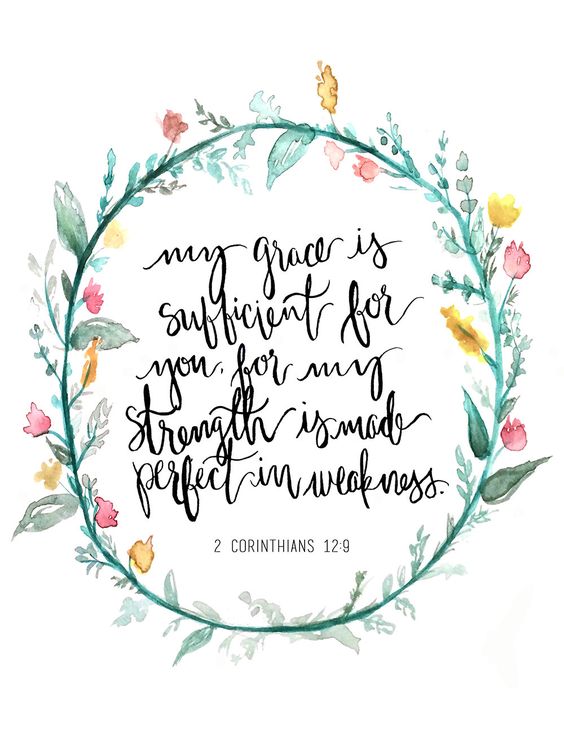
So, to keep me from becoming conceited because of the surpassing greatness of the revelations, a thorn was given me in the flesh, a messenger of Satan to harass me, to keep me from becoming conceited.  Three times I pleaded with the Lord about this, that it should leave me. But he said to me, “my grace is sufficient for you, for my power is made perfect in weakness.” Therefore I will boast all the more gladly of my weaknesses, so that the power of Christ may rest upon me.  For the sake of Christ, then, I am content with weaknesses, insults, hardships, persecutions, and calamities. For when I am weak, then I am strong. ~ ESV

In essence, God told Paul no.  God would not take away the thing that was tormenting Paul.

Grace is sufficient.jpg

Photo Credit: Pinterest

Why not?  Why would God say no to a fervent prayer from one of His children?  Why wouldn’t He give relief when it was requested?

The answer was the same for Paul then as it is for me now: Without the thorn, Paul wouldn’t look to God as he should.  Without my thorn, I wouldn’t lean on God as I should.

Our weaknesses, just like our strengths, are God-given – and they are both ultimately for God’s glory.  We use our strengths to glorify Him, and we bring Him glory in our weaknesses as well.

How is that?  That doesn’t make sense!

When we are weak – when we lose our tempers and yell at our children, for example – we must acknowledge our need for God.

When we read every possible child psychology and parenting article, scouring for something that will work, and we still yell, we come face-to-face with our need for God.

And we throw ourselves down at His feet.  We beg forgiveness. We confess that we can’t do it alone.  We ask Him to help us.

In our weakness, He is strong.

I remember the moment I came to that conclusion after completing the section in the Stuck study where Allen talked about Paul.

I KNEW in that moment that God said no to me, that the temper and outbursts were a thorn in my flesh that wasn’t going anywhere.

And, you know what?  I was immediately at peace with it.  Immediately!  That was my confirmation that God was indeed saying no but that everything would be alright.  God always gives peace.

God v Satan.jpg

Photo Credit: Pinterest

Now, this isn’t to say that God will always say no to our requests. Surely He’s said yes to some of yours as He has said yes to some of mine.

And, it isn’t to say that He’ll say no to you specifically about your temper and your interactions with your children.  You may get a different answer.

What’s more, it isn’t to say that God won’t give me relief in some ways.  He has. He has let me see better ways of interacting with my children that don’t always lead to meltdowns.  There will probably be other breakthroughs and lessons to learn in the future as well.  We are called to pray no matter what.

Effective Prayer.jpg

Photo Credit: Pinterest

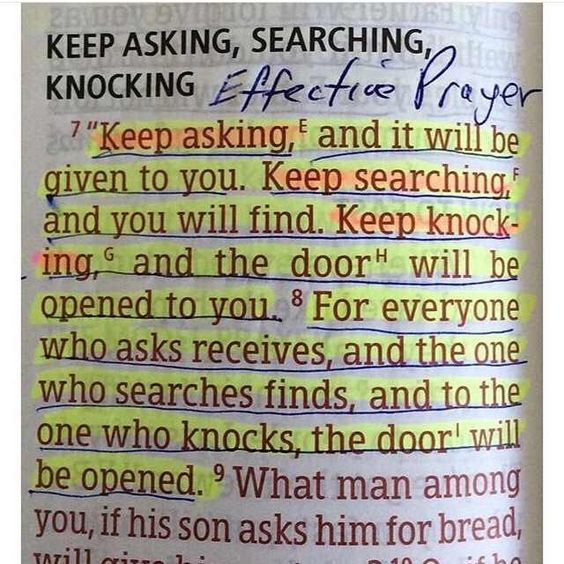
What I am saying is, It’s ok to ask.  It’s ok to plead and cry. However, if you pray and the answer is no, do not be discouraged.  Accept God’s peace when He says no. Find solace in the fact that He is leaving the weakness so that you’ll lean into Him and grow closer to Him.  He will get glory in some way, and that is in fact our ultimate purpose, to glorify God with our lives, even through parts we don’t like.

When has God told you no?  What were you asking for? How did it feel when you realized that the answer to your prayer was no?  I realize that these may be painful situations, but, if you are willing, please share as your stories can help others in similar situations.

*I’ll conclude A #parentingfail next week with Part 3.

~~~~~~~~~~~~~~~~~~~~~~~~~~~~~~~~~~~~~~~~~~~~~~~~~~~~~~~~~~~~~~~~~~~~~~~~~~~~~

Afterword

I wanted to share some of the notes I took in the Stuck study after I realized God was telling me that He wasn’t going to take the thorn in my flesh.  It was a kind of prayer that I journaled. Maybe it will help you, too. 

It was written in response to the following instructions: Read about the apostle Paul’s stuck places.  As you read, think about these two questions – “Who are you, Lord?” and “What do you want from me?” and journal your thoughts…

My response – Who are you, Lord?  – a God full of grace – a God with enough grace for me and all the horrible things I have said, done, and thought.  A God whose power is most evident when I am weak. When I know and accept that I am weak, I cannot brag and take credit for the blessings and good things in my life.  I have to accept that these things have come from God.

What do you want from me?  God wants me to allow myself to be weak.  God wants me to lay the weaknesses on Him.  God wants me to give Him the glory when He sustains me despite my weaknesses.  The weaknesses allow me to see that I do need God. The weaknesses take the pressure off me – I don’t have to be perfect, strong…I can’t be those things.  The weaknesses allow me to make room for God – to let Him take over.

The Point of my Life.jpg

Photo Credit: Pinterest

A #parentingfail – Part 1

Author’s Note: Sharing things that I’ve failed at doesn’t exactly bring me joy.  However, when I began to realize that I was going to have to be obedient to God’s conviction and start a blog, God showed me that I would have to be honest…real…vulnerable. That I would have to be truthful and tell you things about being a wife, a mom, a believer, a woman that maybe weren’t so glamorous or flattering or honorable or joyful.  This was one reason I held off for so long. There are a lot of things I don’t want to tell you about myself. But, in the end, I realized that I am just God’s servant girl, and right now, He wants me to tell you some of the stories He’s given me so you can connect, so you can relate, and so you can see God in my stories and in the stories that He’s given you.  

I had one of those days that makes me feel like a failure as a parent. It was a Saturday so it should have been relaxed and fun and happy and sunshiny.  But I yelled and fussed and argued and complained and knit-picked.  And then I furrowed my brow and pinched my lips together and clenched my teeth so hard that I got a headache, and it was difficult to relax my face.

Why? I kept asking myself.  Why do I keep doing this?

Why can’t I get along with my son?  Why am I aggravated by everything he does?

This is one of the biggest sources of anxiety and frustration and shame in my life right now and has been for some time – my relationship with Ethan – and I don’t have anyone to blame but myself.

I just can’t figure out how to get better at being Ethan’s mom.

Ethan2015.jpg

Ethan and me in 2015 on a chairlift at Tweetsie Railroad.  Bless his heart – he looks just like me when he smiles!

I have cried about it.  I have prayed about it. I have journaled about it.  I have asked other people about it…but I haven’t figured it out yet.

Honestly, this is probably one of the things that pushed me closer to God.  Before Ethan was born, Bill and I were already in church together and I was feeling wooed by God, but it wasn’t until after Ethan was born that I started desperately seeking Him.

Grow closer to God.jpg

Photo Credit: Pinterest

I felt like a terrible mother, and I was begging Him to make me better.

The first 3 or 4 months after Ethan was born were challenging and stressful to say the least, but I was a first-time mom, so that was to be expected.  After about 6 months, things seemed to even out, and it became more enjoyable. Ethan was a smiley, happy, bouncy baby for the most part, and Bill and I kind of settled into the parenting thing.

Ethan2009.jpg

Ethan in 2010 – around 15 months old.

Then, God convicted me to leave my full time job and stay home with Ethan – another fairly smooth transition.  We had our routine. We ate. We read books or built with blocks.  We played outside. We strolled around the neighborhood. He napped.  Things were doable. I found joy.  The parenting thing wasn’t too bad after all.

He was easy to get along with, easy to redirect, easy to pacify.  He liked to be read to and to play with his toys and to be outside in the sun.

When he turned 2, I didn’t see any of the Terrible-Twos stuff many people bemoan, so I naively thought we’d missed that somehow.  Maybe Ethan wasn’t going to do that stuff?!

Ethan2011.jpg

Ethan and Bill in 2011 at Riverbanks Zoo in Columbia, SC.  Ethan would have been about 2 1/2 here.

Then, along came about 3 or so, and all of a sudden, my pleasant, smiling, easy-to-get-along with little fella started saying no to everything I asked him to do, refusing to nap, being difficult to redirect from one activity to another, and complaining about the food I got for him (which was exactly what he’s just requested not 2 minutes before).

Where the heck was my precious angel-baby?

Ethan2012.jpg

Posing for family pictures on the beach in 2012 – he was 3 1/2.  (He still looks like an angel-baby with those big, clear, blue eyes, doesn’t he?!)

I had no idea what to do!  I’d always heard that children would test you…”just be consistent” was the advice I replayed from my pre-child days.

So, I was consistent…I thought.  But a day turned to a week which turned to two months which turned to a year, and he was still disagreeable and stubborn and wouldn’t nap and complained about his food and didn’t like to stroll around the neighborhood anymore.

And I still didn’t know what to do.  “Be consistent” didn’t seem to be working.  So, instead, I decided I could be more stubborn than he could.  I was the parent, and he would do what I said.  (I know. I know.  I’m supposed to be the adult here.  I didn’t say this was the right decision or the most mature parenting move I could have made).

At some point, I don’t exactly know when, I started screaming and yelling and slamming whatever was in arm’s reach onto the table or the floor and making him sit in the corner and spanking probably more than I should and making the “mad face” as he called it.

I NEVER knew I had a bad temper until I had children 😦

Control your temper.jpg

Photo Credit: Pinterest

All this led to a TON of guilt.  I cried – correction, I blubbered.  By myself and to Bill mostly. But, I cried a lot.  I also started praying about my temper.  I know parents have to be in charge and to  discipline their children, but I knew I was taking it too far when I lost my temper the way I did.

I honestly believe this was what drew me so close to God during this season of my life.  I had to learn to lean on Him because nothing I could do was working.

Ethan2017.jpg

Summer 2017

Next week, in A #parentingfail – Part 2, I’ll share some things I have learned along the way about children and tempers and consistency.  I’ll also share some specific words from God that I’ve gotten in response to my petitions for Him to take away my temper so I wouldn’t scream at my kids anymore.  I think you’ll be surprised at some of the answers I’ve gotten.  I know I was.

The God I serve.jpg

Photo Credit: Pinterest

How about you?  What have you learned from going through the Terrible-Twos or Terrible-Threes or Terrible-Tweens or whatever difficult stages you’ve walked through as a parent?  Where did you go for help? What did you find that didn’t work? What did work? Where are you now in your parenting journey? Any advice from those with older children to those with younger ones?  Can we survive this thing called Parenthood?!